Quick answers
How much deposit should a contractor ask for?
For most home remodels, a reasonable deposit is often a modest upfront amount tied to scheduling, permits, or materials — not full payment. If a contractor wants a very large cash deposit or all the money before work starts, slow down and check everything.
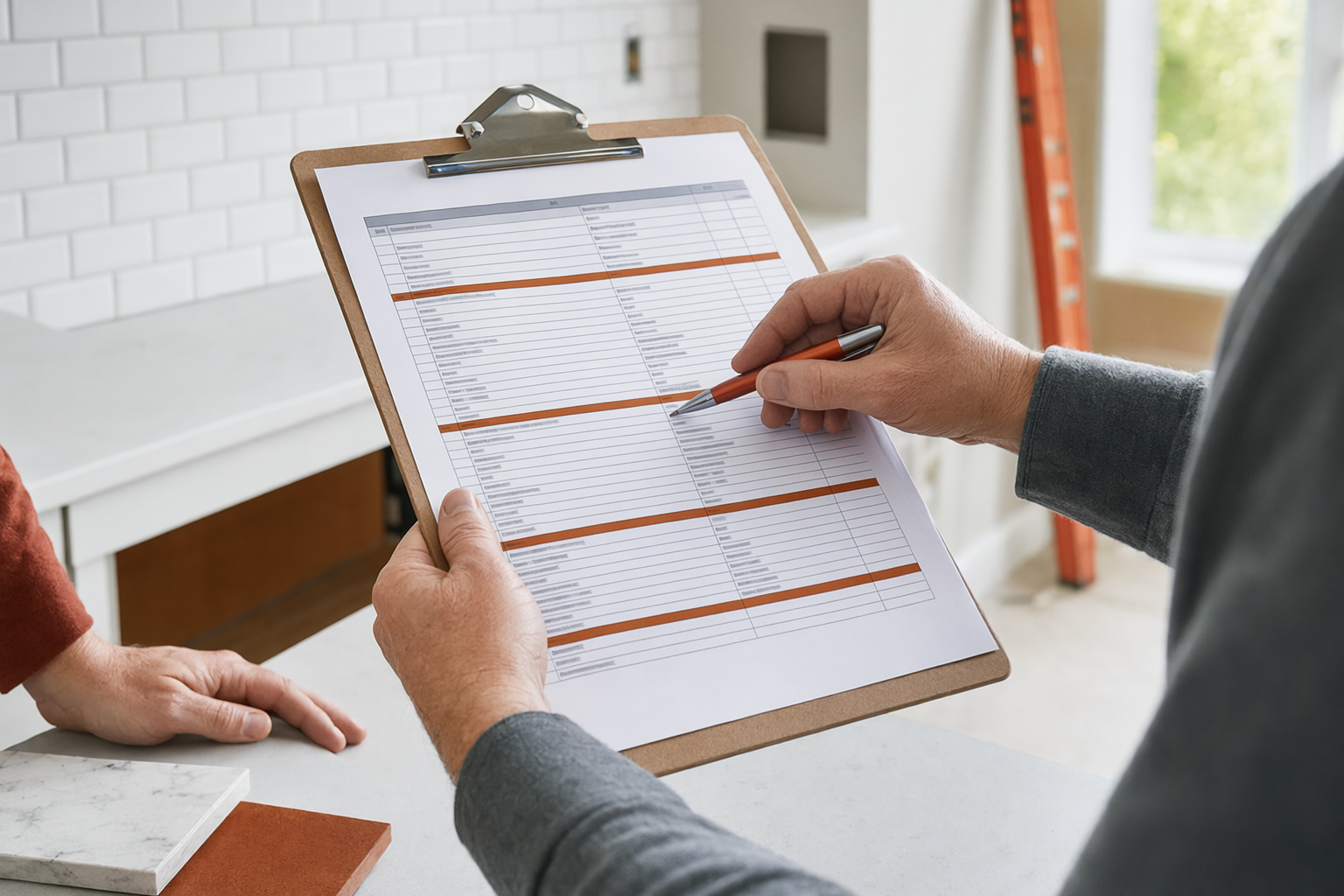
Short answer: a deposit should be limited, clear, and in writing
A contractor may ask for a deposit before work starts. That is normal in many remodels because they may need to reserve time on the schedule, order materials, or start permit paperwork. But the deposit should make sense for the job and be clearly written into the contract.
In plain English: a small-to-moderate upfront payment is common, but full payment up front is a major red flag. The exact amount depends on your city, state, job size, materials, and local rules. Some states also limit how much a contractor can collect before work begins.
A better setup is usually a written payment schedule tied to real progress: deposit, then payments at clear milestones, then final payment after the work is complete and you are satisfied. These are general guidelines only, not legal or financial advice, and local rules vary.
- Normal: a written deposit tied to scheduling, permits, or materials
- Red flag: full payment before work starts
- Always verify the contractor's license and insurance yourself

What is often reasonable for a remodel deposit?
For many remodeling projects, homeowners often see deposits in the rough range of a few hundred dollars to several thousand dollars, depending on the size of the job. On a larger kitchen, bathroom, basement, addition, or whole-home remodel, the deposit may be higher because materials, lead times, and planning are more involved. That said, these ranges are not quotes, and there is no one number that fits every project.
What matters more than the exact dollar amount is why the deposit is being collected. A good contractor should explain what it covers. Common reasons include reserving the start date, pulling permits, paying for custom or special-order materials, or starting demolition planning.
If the contractor cannot explain the deposit in plain words, or the amount feels far out of line with the work being done before construction begins, ask more questions. You can also compare payment terms from multiple written quotes. If you are still early in planning, cost guides and remodel guides can help you understand the job before you sign anything.
What a good payment schedule usually looks like
A solid contract usually breaks payments into stages instead of demanding one big upfront payment. This protects both sides. The contractor gets paid as work progresses, and the homeowner can see that the project is moving forward before releasing more money.
A payment schedule should match real milestones, not vague promises. For example:
- Deposit to reserve the project and begin approved pre-construction steps
- Payment when permits are in place or materials are delivered, if that applies
- Progress payments after clearly defined stages of work are completed
- Final payment only after the job is substantially complete and punch-list items are addressed
Hold the final payment until the work is done and you are satisfied. That does not mean refusing to pay a good contractor fairly. It means the contract should give you a clear way to confirm the work is complete before the last payment is made.
Big red flags around deposits
This is where many homeowners get burned. A bad contractor may use a large deposit to fund other jobs, disappear, or pressure you into signing before you have time to review the details.
Watch for these warning signs:
- Asking for full payment up front
- Asking for a very large cash-only deposit
- No written contract
- No license or no proof of insurance
- Pressure to "sign today"
- Refusing to give a detailed payment schedule
- Vague wording like "materials and labor as needed" with no milestones
- Asking you to pull permits yourself when they should be doing it
If you see more than one of these red flags, stop and get another quote. Always hire licensed, insured contractors and verify the license and insurance yourself with the state, local agency, and insurer when possible.
How to protect yourself before you pay any deposit
Before paying anything, read the contract carefully. Make sure it includes the contractor's legal business name, license information if required in your area, proof of insurance, a scope of work, materials or allowance details, permit responsibility, start and payment terms, and how change orders will be handled.
Then compare at least two or three written quotes if you can. The cheapest deposit is not always the safest choice, and the highest price is not always the best work. Look for clear scope, realistic timing, professional communication, and payment terms tied to actual progress.
Helpful questions to ask:
- What exactly does this deposit cover?
- Is any part of it for special-order or non-returnable materials?
- What milestones trigger the next payments?
- Who pulls permits, if permits are required?
- What happens if the schedule changes?
- How are change orders priced and approved?
- Are you licensed and insured, and can I verify both?
If you need help finding contractors to compare, Keystone Reno is a free matching service for homeowners. We are not a contractor, builder, or design firm, and we do not perform work. We simply help you connect with vetted, licensed, insured remodeling contractors near you so you can compare options yourself.
If you are new to remodeling in the US
If English is not your first language, do not let anyone rush you. Ask for the contract, payment schedule, and scope in writing, and take time to review them. Bring a trusted family member or friend if you want help reading the paperwork. A good contractor will explain things clearly and will not get angry because you asked questions.
Rules on deposits, permits, licenses, and inspections can vary a lot by city and state in the US. Always check local requirements with your building department and make sure the contractor is properly licensed and insured for your area. This page is general information only.
If you want general help understanding the process, start with our help center or browse more guides. If you are ready to compare local pros, you can get matched. The service is free for homeowners, and we only collect basic contact and project details like your name, phone, email, project type, city or ZIP, timeline, and preferred language.
A reasonable deposit is usually limited, explained in writing, and followed by milestone payments — not full payment up front.
Common questions
Is it normal for a contractor to ask for a deposit?
Yes, in many remodels an upfront deposit is normal. It should be reasonable for the project, explained clearly, and written into the contract instead of being a vague cash request.
Should I ever pay a contractor in full before work starts?
That is usually a major red flag. A better setup is a written payment schedule tied to real project milestones, with final payment held until the work is done and you are satisfied.
Can a contractor ask for cash only?
Cash-only payment demands are a warning sign, especially for large deposits. You should have a written contract, a receipt, and a clear record of every payment.
What if the deposit seems too high?
Ask what it covers and compare the answer against other written quotes. If the explanation is weak, the payment terms are vague, or you feel pressured, pause and get other estimates.
Do deposit rules depend on the state?
Yes. Some states or local agencies may limit deposits or set contract rules for home improvement work, so check your local requirements and building department.
What does Keystone Reno do?
Keystone Reno is a free matching service, not a contractor or remodeler. We help homeowners connect with vetted, licensed, insured remodeling contractors so they can compare quotes and choose who to hire.