Quick answers
How much does it cost to finish a basement?
Finishing a basement usually costs about $20,000–$75,000+ in the US, depending on size, layout, and finishes. Get a free match with vetted, licensed, insured contractors near you—no pressure and no cost to you.
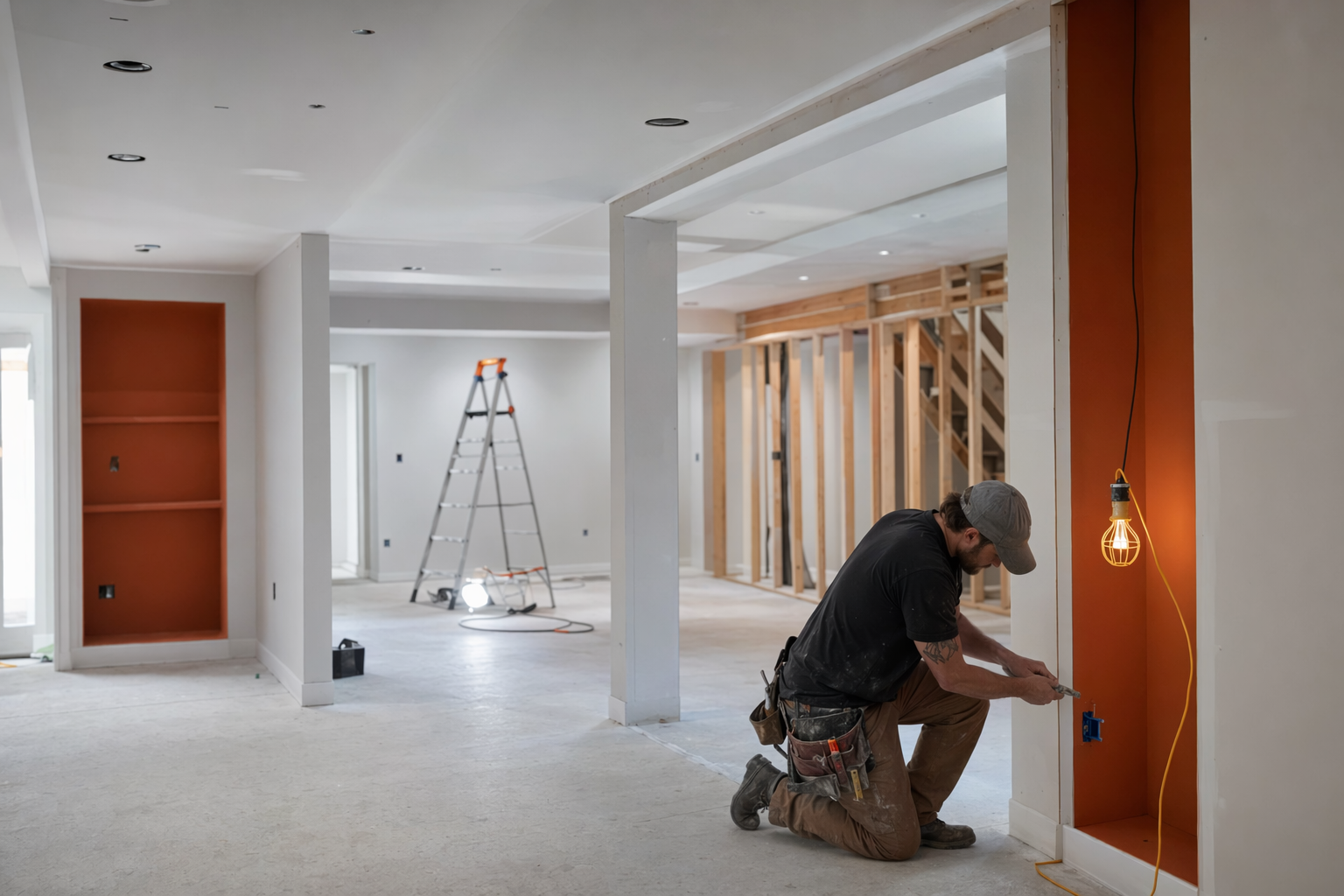
Quick answer: what basement finishing typically costs
Most homeowners spend roughly $20,000–$75,000+ to finish a basement. This range can swing a lot because “finishing” can mean anything from basic drywall and flooring to a full living space with a bathroom, bar, or storage built-ins.
[Basement projects vary by city and home], so treat any number you see online as a ballpark, not a quote. Your exact cost depends on your current basement condition, what you want to add, and the pricing in your area.
A good contractor will ask detailed questions and do a site visit before they talk numbers.

Typical cost ranges by basement “level”
Here are common ballpark ranges to help you understand what “grade” of finish you’re buying. These are not quotes and can be higher or lower based on your home and local labor/material prices.
1. Basic finishing (clean up, framing/drywall, simple flooring): $20,000–$40,000
2. Standard finished basement (more complete finishes like better flooring, paint, lighting, trim): $40,000–$65,000
3. Higher-end / fully finished with extras (built-ins, upgraded lighting, nicer materials, maybe a bar or multiple rooms): $65,000–$100,000+
If you include a bathroom, a wet bar, or adding an egress-style bedroom setup, costs typically move toward the higher end—sometimes well beyond $100,000—because of extra trades and permitting.
What drives the cost up (and what can lower it)
Most basement budgets don’t blow up because of one thing—they change as decisions stack up. These are the biggest cost drivers:
- Basement size and ceiling height: More square footage (and any ceiling complexity) generally increases labor and materials.
- Layout changes: Creating new rooms, adding doors, or moving walls usually costs more than finishing an open space.
- Bathrooms or plumbing: Even a “small” bathroom can add cost due to plumbing work, fixtures, and inspections.
- Moisture/water issues: If there’s dampness, staining, or active water, you may need fixes before finishing (ask about how they’ll handle it).
- Electrical complexity: More outlets, better lighting, or dedicated circuits for a home office/media room often adds cost.
- Finishes: Flooring type, tile vs. vinyl, paint/trim quality, and cabinetry/built-ins are major levers.
What can lower costs:
- Keeping the plan simpler (fewer rooms, fewer changes to the plumbing route).
- Reusing existing good-condition elements when possible (your contractor should be clear about what can and can’t be reused).
- Choosing mid-range finishes and getting at least 2–3 written bids for comparison.
Because costs vary by city and state, your best “real” estimate comes from local, licensed, insured contractors who can review your basement.
Permits and the “keep it legal” part (general guidance)
Basement finishing often requires permits and inspections, and rules vary by city and state. Some projects also affect fire safety requirements and egress standards (especially if you plan to use it as a bedroom).
We can’t give legal or code advice here, but the practical point is this: ask any contractor whether permits are required for your scope and whether they’ll handle the permit process (or how it works where you live).
If you’re not sure what’s needed, contact your local building department or ask your contractor to explain the permit steps in plain language.
How to avoid getting burned: remodeling red flags
A basement remodel is a big spend—so protect yourself early. Watch for these warning signs when you talk to contractors:
- Big cash-only deposits or demands for full payment upfront.
- No written contract (even for “small” work).
- Contractor won’t show proof of a valid license and insurance.
- Pressure to “sign today” or refuse to discuss options and scope.
- Vague plans: they won’t explain what’s included, what’s excluded, and who pays for changes.
A good contractor does things differently:
- Provides a clear written scope of work and a written estimate.
- Breaks out key items (labor and materials) so you can compare bids.
- Explains what happens if conditions change (like moisture issues or hidden framing problems).
- Shows you how they’ll keep the space safe and reasonably clean during construction.
Before you hire anyone, verify the license and insurance yourself (don’t just accept a screenshot). When in doubt, choose the person who is most transparent—not the one who talks the fastest.
What to do next (free): get matched and compare bids
If you want a realistic number for your basement, the fastest path is to get bids from licensed, insured local contractors. Keystone Reno is a FREE matching service—we don’t do the work, and we don’t provide engineering or code decisions.
To get matched, share what you want (example: family room, bedroom, office, bathroom), your city/ZIP, your timeline, and your preferred language. We’ll connect you with vetted contractors to request estimates.
Before you choose, compare bids the homeowner way:
1. Make sure the scope is the same across bids (otherwise you’re comparing apples to oranges).
2. Ask what’s included for electrical, lighting, flooring, drywall, trim, and ventilation.
3. Confirm permit handling and inspection expectations.
4. Watch payment terms—hold back final payment until the work is done and you’re satisfied.
For more basics on costs and planning, you can browse basement finishing cost guidance and general prep tips in remodeling guides. If you need help, start with how Keystone Reno works or get support.
Finishing a basement often runs about $20,000–$75,000+ depending on size, layout, and finishes—get local written bids from licensed, insured pros (Keystone Reno matches you for free) and watch for permit and moisture-related surprises.
Common questions
Is it cheaper to finish a basement than to build an addition?
Often, finishing a basement costs less than adding square footage on top or out to the side, because the foundation and exterior walls already exist. That said, basements can still get expensive if there are moisture issues, major plumbing changes, or complex electrical needs.
Can I finish a basement myself to save money?
Some homeowners handle parts of the work, but basements commonly involve permits, electrical, plumbing, and moisture control—areas where mistakes can cost more later. A licensed, insured contractor can also help make sure the finished space is safe and built to local requirements.
What’s the biggest surprise cost in basement projects?
Moisture problems are a common surprise. If water is present, you may need additional steps before finishing. Another frequent surprise is scope creep—adding a bathroom, extra rooms, or upgrading finishes late in the process.
How many bids should I get?
A common approach is to request at least 2–3 written bids so you can compare the scope and see whether pricing is consistent. If one bid is dramatically lower, ask what’s missing—not just the price.
Does the contractor’s estimate include permits and inspections?
It depends on the contractor and the scope. Ask specifically what’s included in writing and who is responsible for permits. Also confirm that the contractor is properly licensed and insured for the work they’re doing.