Projects
Flooring and finish work
Flooring and finish work can make an older home feel new, but costs swing a lot based on material choice and how much prep or repair is hiding underneath. The biggest money decisions are usually the flooring product itself and the amount of trim, patching, and paint detail work.

What flooring and finish work usually costs
For many homes, flooring and finish work lands somewhere between about $5,000 and $30,000+, but that is a very wide range and not a quote. A small paint-and-trim refresh in a few rooms may cost much less, while new flooring throughout a house with baseboards, door trim, stair work, wall repair, and premium finishes can go much higher.
As a rough example, homeowners often see basic installed flooring options start around a few dollars per square foot, while better hardwood, tile, stair finishing, custom trim, and detailed paint work can push costs much higher. Prep work matters just as much as the visible finish. If the subfloor is uneven, old flooring has to be removed, walls need repair, or trim has to be custom-fit, labor rises fast.
The two decisions that usually matter most are: what material you choose, and how perfect you want the finish to look. A simple, durable finish with standard trim details costs far less than custom carpentry, stain-grade woodwork, pattern tile, high-end paint, or work in an older home with uneven walls and floors.
Costs also depend on scope, materials, your home, your city, and the contractor. Prices vary a lot by state and metro area, and permit or code rules may vary too.

What is included in flooring and finish work
Homeowners use this kind of project to improve how a home looks, feels, and wears over time. It can include new flooring, baseboards, casing around doors and windows, crown molding, interior painting, wall patching, stair refinishing, interior doors, and other visible finishing details.
Sometimes this work is cosmetic only. Other times it happens after a larger remodel, water damage repair, layout change, or addition. That matters because finish work often depends on what came before it. If drywall is rough, framing is off, or the floor underneath is not level, the finish crew may need extra time to make things look right.
A good contractor will walk room by room and explain what is included, what is excluded, and what assumptions they are making. That should be in writing. Flooring removal, furniture moving, subfloor repair, painting ceilings, and replacing trim are common places where homeowners think something is included when it is not.
How the process usually goes
Most flooring and finish jobs follow a similar path, even if the size is different. Good planning at the start prevents expensive change orders and disappointing results later.
- Define the scope. Decide which rooms are included, what stays, what gets replaced, and whether you want simple durable finishes or more custom detail.
- Choose materials early. Flooring type, trim style, paint sheen, stain color, and transition details affect both price and schedule.
- Measure and inspect conditions. A pro should check floor flatness, moisture risks, wall condition, stair details, and how new finishes will meet existing surfaces.
- Get a written quote. It should spell out labor, materials, prep, demo, trim, painting, cleanup, and allowance items if exact products are not selected yet.
- Order materials. Some flooring, specialty trim, or custom doors can have long lead times.
- Prep and protect the home. That may include dust control, floor removal, patching, leveling, or moving appliances and furniture.
- Install and finish. Flooring usually goes in with trim, touch-up, caulk, paint, stain, and transitions done in a set order.
- Final walkthrough. Make a punch list, check corners and transitions, and hold final payment until the work is done and you are satisfied.
If you are comparing pros, how to vet a contractor is worth reading before you sign anything.
Common surprises that change the price
The biggest surprises are usually under the old flooring or inside the walls. Once old carpet, laminate, tile, or baseboards come out, a contractor may find uneven subfloors, squeaks, moisture damage, termite damage, cracked tile underlayment, or wall damage hidden by trim.
Older homes also take more finish labor. Corners may not be square, floors may slope, and trim may need more cutting, shimming, scribing, and caulking to look clean. That is one reason two quotes can be very different even when the rooms seem the same on paper.
Stairs are another cost driver people underestimate. Treads, risers, nosing, landings, rail details, and paint or stain finishing can add substantial labor. Custom stain matching, smooth wall prep, and high-visibility areas like entryways also tend to cost more because the workmanship standard is higher.
This is also where red flags show up. Be careful with contractors who ask for a large cash-only deposit, want full payment up front, refuse to give a written contract, cannot show a license, or pressure you to sign today.
How long flooring and finish work takes
A small flooring or paint-and-trim project may take a few days. A larger whole-home flooring and finish job often takes one to three weeks, and more complex work can take longer. The real timeline depends on the size of the home, the condition of existing surfaces, material lead times, drying or curing time, and whether other trades are working first.
One thing homeowners often miss: the visible install may be quick, but prep time is not. Floor leveling, patching, sanding, stain samples, paint drying, and waiting on material deliveries can stretch the schedule. Occupied homes also move slower because crews need to protect belongings and work around daily life.
No one can honestly promise your exact timeline without seeing the home and scope. Ask each contractor what could delay the job, how they handle change orders, and whether they expect you to move furniture or leave parts of the home during the work.
How to find the right pro for the job
For straightforward flooring replacement, a flooring installer may be enough. For a bigger refresh involving trim, doors, wall repair, painting, and multiple rooms, many homeowners do better with a licensed, insured remodeler or finish carpenter who manages the full scope. Always verify the license and insurance yourself, and check what type of work they are legally allowed to do in your state or city.
Ask for a written scope, not just a price. You want to know exactly what material is being installed, what prep is included, who handles demo and disposal, how transitions are finished, what happens if damaged subfloor is found, and what is excluded. Compare written quotes side by side before you choose.
Keystone Reno is a free matching service, not a contractor. We do not perform the work. We help homeowners get connected with vetted, licensed, insured remodeling contractors near them for projects like flooring, trim, paint, and finish work. You stay in control: compare quotes, choose who to hire, and hold final payment until the job is complete and you are satisfied.
If you want to explore project types first, start at all remodeling projects. If you are ready to talk to local pros, you can get matched. You can also browse more remodeling cost guides to set a realistic budget.
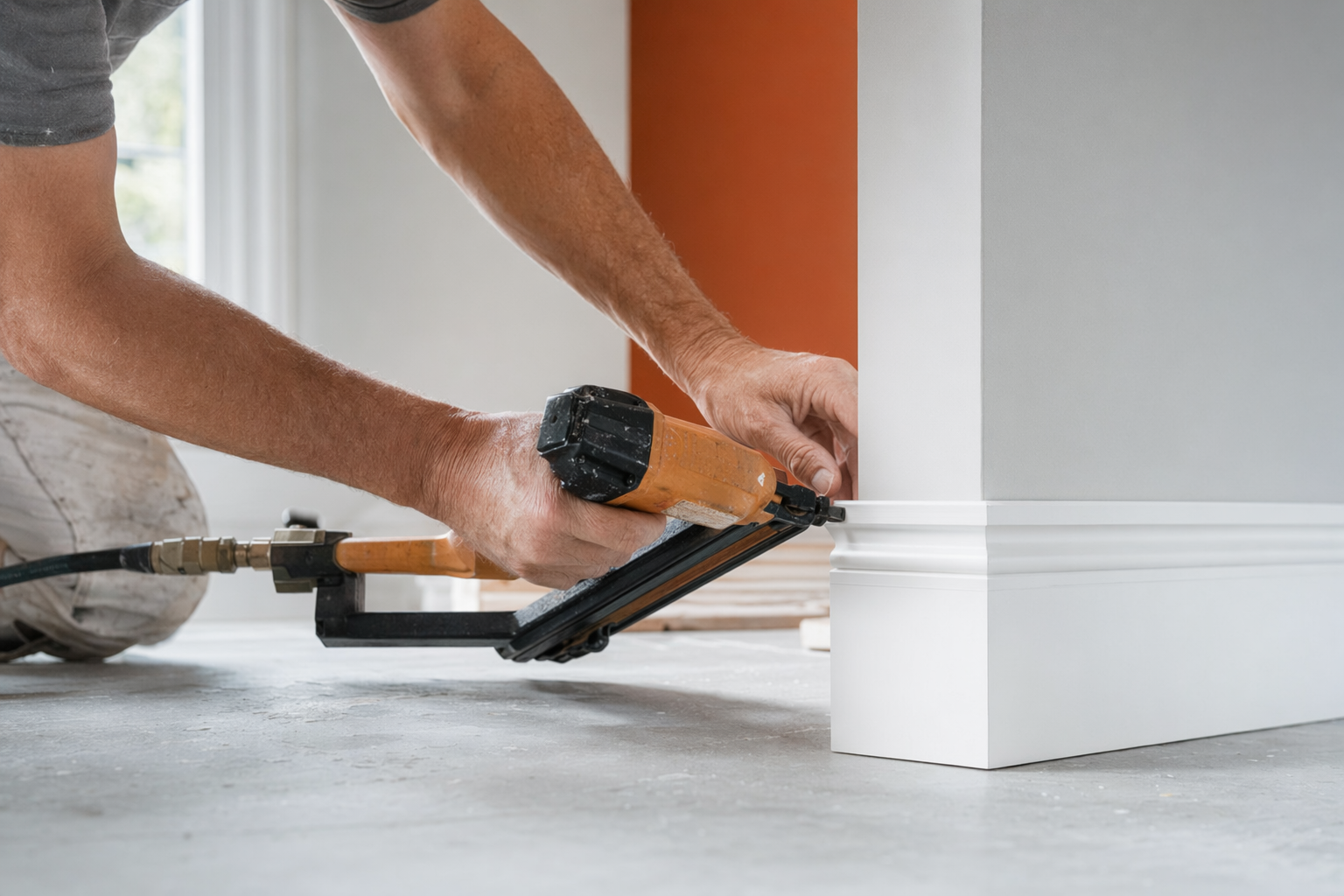
Flooring and finish work can change a home fast, but the real cost depends mostly on your material choices and how much prep, repair, and detail labor the house needs.
Common questions
How much does new flooring cost for a whole house?
It varies a lot by square footage, material, subfloor condition, stairs, trim work, and your city. Many whole-house flooring jobs land anywhere from several thousand dollars to well over $20,000, and premium materials or major prep can go higher. These are general ranges, not quotes.
Is it cheaper to do flooring before painting?
Often, flooring and painting are planned together because trim removal, wall patching, and touch-up affect both. The right order depends on the materials and scope, so ask your contractor to explain their sequence in writing.
Do I need a licensed contractor for flooring and finish work?
That depends on the type of work and local rules. In the US, license and permit requirements vary by state and city, so always check local requirements and hire licensed, insured pros when required. Verify the license and insurance yourself.
What is the best flooring for resale?
There is no single best choice for every home. Buyers usually respond well to finishes that look clean, durable, and consistent with the price of the home, but the right answer depends on your market, budget, and how long you plan to stay.
How do I avoid getting burned by a flooring or finish contractor?
Get a detailed written contract, verify license and insurance, compare multiple written quotes, and avoid anyone asking for full payment up front or pushing cash-only deals. Hold final payment until the work is done and you are satisfied.