Free downloads
Questions to Ask a Contractor
Get our free checklist: the exact questions to ask a remodeling contractor before you hire. It helps you compare contractors on the same things—license, timeline, payments, permits, and what happens if something goes wrong.
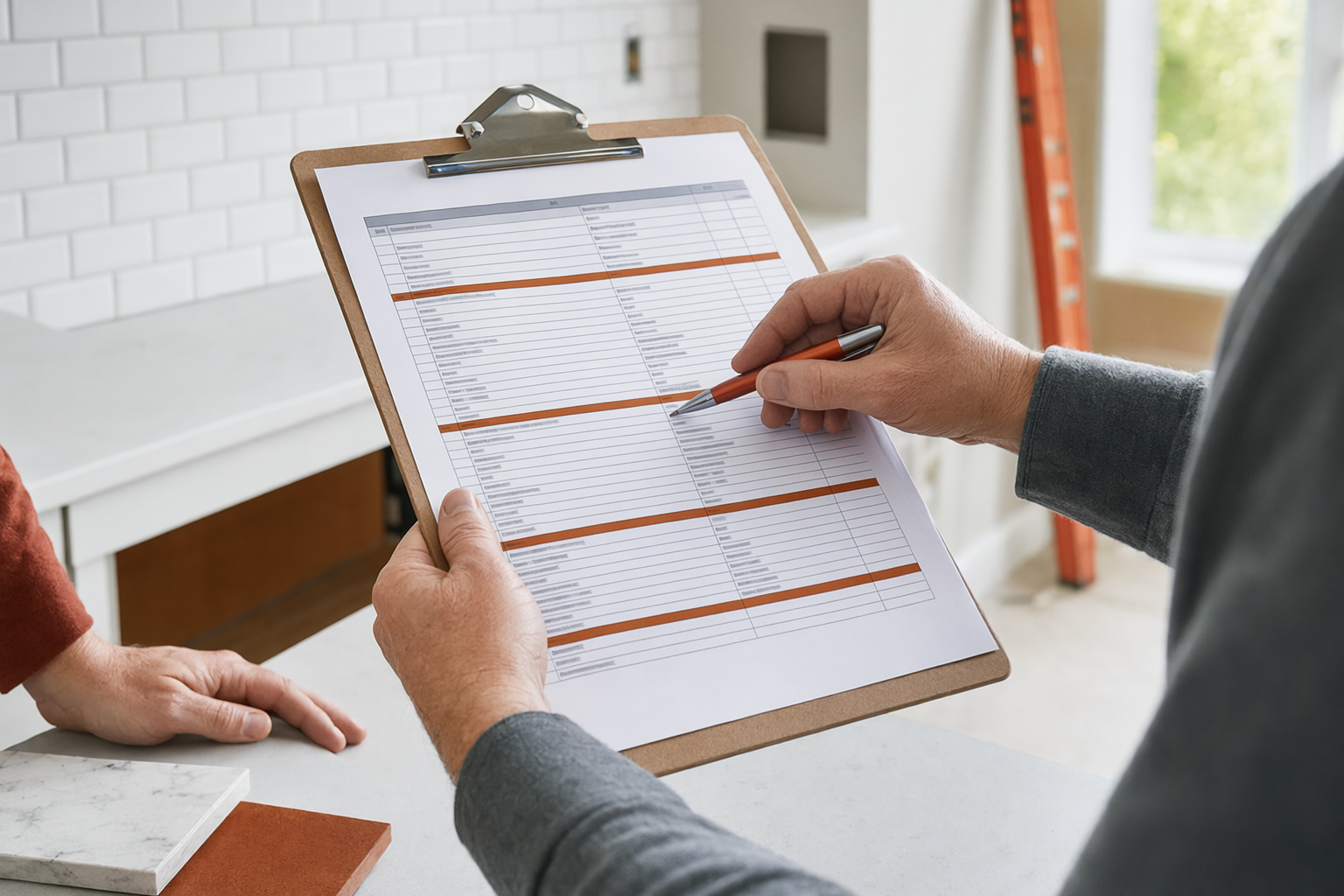
What you’ll get in this free download
This worksheet is built to protect you from the most common “I thought it would be included” problems in home remodeling.
You’ll get a structured list of questions you can take into calls, walkthroughs, and estimate reviews. It’s not a script to pressure anyone—it’s a tool to help you get clear, written answers from contractors.
Typical sections include:
1. Licensing, insurance, and permits (so you know they’re legally allowed to work and insured to handle jobsite risk)
2. Project plan and schedule (what they’ll do first, what causes delays, and how they communicate)
3. Scope and materials (what’s included vs. excluded, product brands/options, and change-order rules)
4. Payments and deposits (what “normal” looks like, what should be in writing, and what you should avoid)
5. Warranty and after-work support (how long coverage lasts and how claims are handled)
6. Clean-up, site safety, and inspections (so you understand what “done” means)
The PDF is generated separately—this page just helps you use the checklist effectively before you request estimates.

Who this helps (especially if you’re new to the US)
If you’re a new homeowner, new to remodeling, or a non-native English speaker, contractor meetings can feel overwhelming—fast talk, unclear promises, and lots of paperwork.
This checklist helps you slow things down. You’ll know what to ask, what to request in writing, and what red flags to watch for when someone answers vaguely.
It also helps you compare contractors fairly. Instead of comparing price alone, you’ll compare whether they’re explaining the work clearly, planning for permits/inspections, and treating payments responsibly.
How to use the checklist step-by-step
1. Download the PDF and skim it once before your first call.
2. Bring it to every walkthrough or estimate meeting.
3. Ask the questions in plain language, then request written answers (email is fine). If they can’t provide something in writing, note it.
4. Compare contractors using the same checklist. A “cheap” estimate can cost more later if it leaves out demo, finishes, disposal, electrical/plumbing work, or permit costs.
5. Don’t agree to the work based on verbal promises. Remodeling decisions should be supported by a written contract and scope details.
If you want a matched contractor list first, you can start here: get matched.
Quick red flags to watch for while you interview contractors
Even without seeing the checklist, these issues are common warning signs. If you spot them, take it seriously.
- Large cash-only deposits or asking for full payment up front
- No written contract or a contract that doesn’t clearly list scope, materials, and responsibilities
- No proof of license/insurance, or refusal to let you verify it
- Pressure to “sign today” or to skip details
- Vague answers about permits, schedule, or change orders
Always verify the contractor’s license and insurance yourself, and confirm they understand local permit rules. Codes and requirements vary by city and state, so your local building department and a licensed pro are the right sources for specifics.
How this fits with deeper vetting
This download is a practical starting point, but it doesn’t replace full contractor vetting.
If you want a more complete process, use how to vet a contractor to go step-by-step on what to check before you hire.
And if you’re still deciding what project type you’re planning, browse real project ideas and common scope areas in projects.
About cost, timelines, and guarantees
Remodeling costs and schedules depend on many things: your home’s layout and condition, the materials you choose, how complicated the work is, your city’s permitting/inspection pace, and the contractor’s approach.
So treat any cost range as a starting point, not a quote. A contractor should be able to explain what drives the price up or down for your specific scope—especially if you expect changes like upgraded finishes, expanded plumbing/electrical, or custom work.
No one can promise perfect outcomes. What you can look for is clarity: a written scope, realistic scheduling, documented changes, and a warranty/after-work process that makes sense.
Download this free contractor-question checklist so you can get clear, written answers, avoid payment and scope surprises, and compare remodeling contractors safely.
Common questions
Is this checklist a contract or legal advice?
No. It’s a free question worksheet to help you interview and compare contractors. It’s general information—not legal advice. Always rely on a written contract and get answers that fit your local rules and licensed professional guidance.
What should I ask about permits and inspections?
Ask who is responsible for permits (and whether permits are expected for your scope), what inspections might be required, and how the contractor handles the process. Requirements vary by city and state, so get clear written answers and confirm with your local building department if needed.
Should I pay a deposit before work starts?
You may see deposits in the industry, but avoid large cash-only payments and anything that asks for full payment upfront. Ask what the deposit covers, how it’s documented, and make sure the payment schedule is written in your contract.
How do I use this if I’m comparing multiple contractors?
Ask every contractor the same questions from the checklist and request written responses. Compare scope details, payment timing, how changes are handled, warranty terms, and how they plan schedule and communication.
Does Keystone Reno download mean Keystone Reno will do the work?
No. Keystone Reno is a FREE matching service. We connect you with vetted, licensed, insured remodeling contractors near you, but we don’t perform construction, remodeling, or design work.